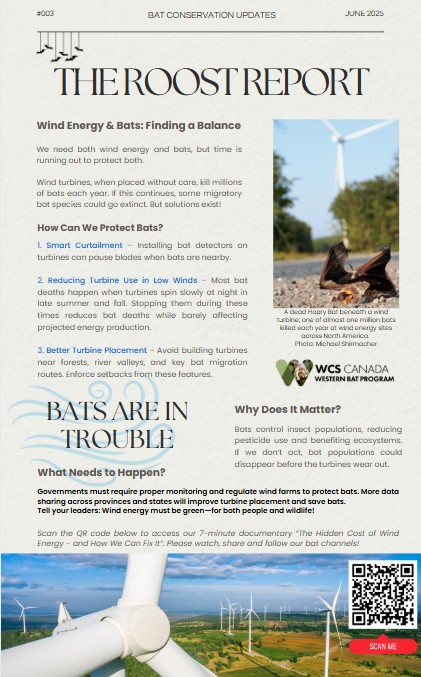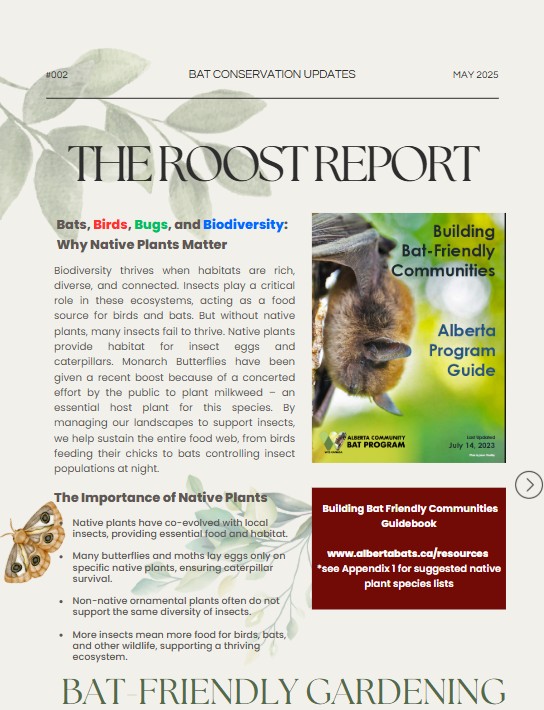
Alberta Community Bat Program

How Probiotics Could Help Save Alberta’s Bats

How Probiotics Could Help Combat White-nose Syndrome in Alberta

Together with our partners, we’ve begun a trial to examine the potential for probiotics to combat white-nose syndrome in Alberta. Read the CBC article to learn more:

As deadly fungus spreads, Alberta turns to probiotics to save dwindling bat population | CBC News

How Probiotics Could Help Save Alberta’s Bats Read More »

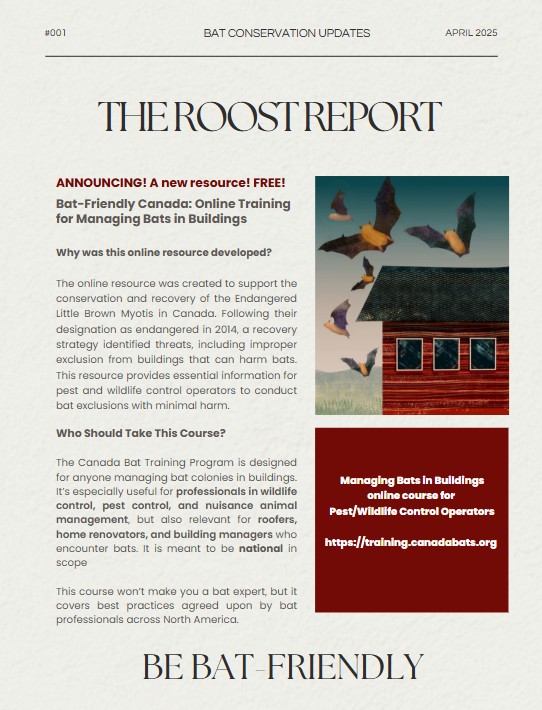
Introducing Our Online Course for Managing Bats in Buildings (The Roost Report #001)

Stay in the loop with what’s happening at the Alberta Community Bat Program and with bat conservation efforts across Alberta! The Roost Report is your go-to source for the latest updates. In this first edition, we’re excited to introduce our new online training program for managing bats in buildings—visit training.canadabats.org to learn more.

View Full Screen

Introducing Our Online Course for Managing Bats in Buildings (The Roost Report #001) Read More »
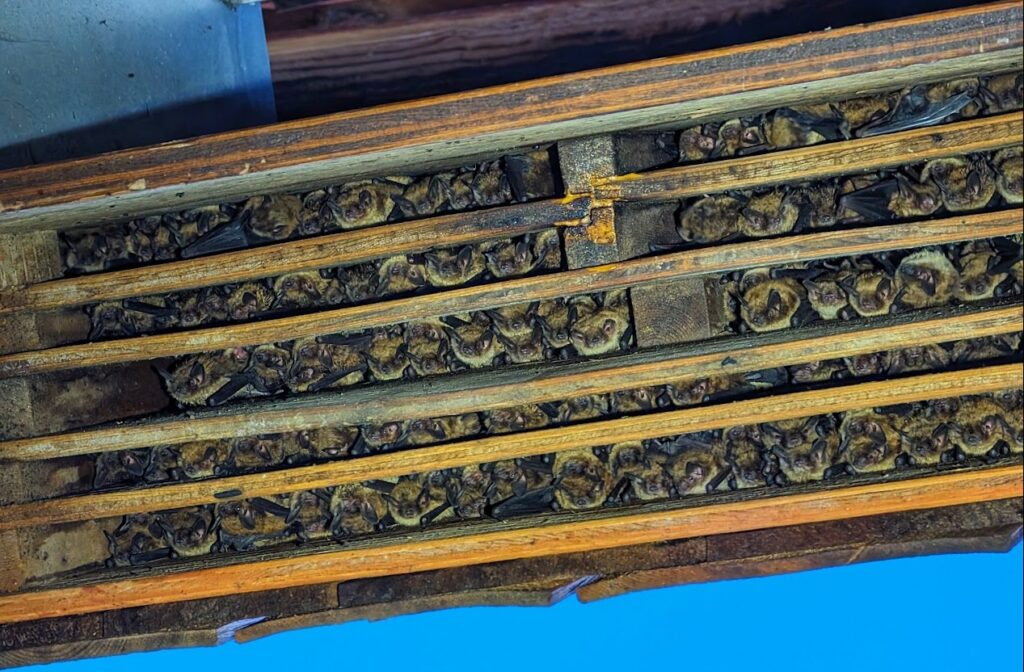
Bat House Video Released!

Alberta Community Bat Program Releases Bat House Best Practices Video.

WCS Canada’s Alberta Community Bat Program is thrilled to announce the release of our latest video, which showcases best practices for the use of bat houses. This video is a product of more than a decade of work by WCS Canada, collaborating with communities across western Canada to research and monitor bat houses. Content is consistent with the Best Management Practices for the Use of Bat Houses in US and Canada, developed by an international team of experts in partnership with WCS Canada.


We want to thank everyone who contributed to the development of this video, especially our videographer, Jason Headley (Myotis Lens Environmental). 


Financial support for this video and other projects was received from the Edmonton Community Foundation, Calgary Foundation, Alberta Conservation Association, Environment and Climate Change Canada, Government of Alberta, and many public donors.


Also, be sure to check out our recent brochure, summarizing many of the key points of the Best Management Practices: https://wcscanada.org/resources/summary-best-management-practices-for-bat-houses-in-the-usa-and-canada/


For more information on bat houses in Alberta, visit: www.albertabats.ca/bathouses.


Check back for more bat house resources coming soon!

Stay up to date. Subscribe to our YouTube Channel

For the best viewing experience, set playback quality to HD under settings (gear icon, lower right of YouTube window) and play full screen. 

Bat House Video Released! Read More »

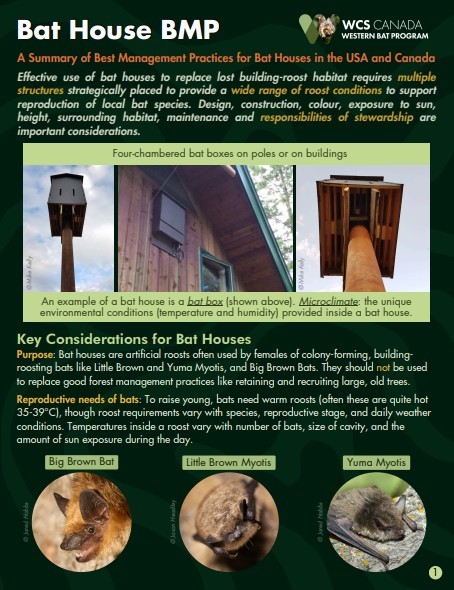
We’ve released a new brochure: “A Summary of Best Management Practices for Bat Houses in the USA and Canada”

WCS Canada’s Western Bat Program, which includes the Alberta Community Bat Program, has released a new brochure about bat houses. This brochure highlights key points from the “Best Management Practices for the Use of Bat Houses in US and Canada.” The full best management practices were developed by WCS Canada in collaboration with the US Fish and Wildlife Service and the Canadian Wildlife Health Cooperative for the White-nose Syndrome Conservation and Recovery Working Group.


Download your free copy at: https://wcscanada.org/resources/summary-best-management-practices-for-bat-houses-in-the-usa-and-canada/ 


For more information on bat houses in Alberta, visit: www.albertabats.ca/bathouses.

We’ve released a new brochure: “A Summary of Best Management Practices for Bat Houses in the USA and Canada” Read More »

White-nose syndrome confirmed in Alberta for first time

This spring we confirmed, for the first time, the presence of white-nose syndrome (WNS) in Alberta. The affected region includes badland habitats along the Red Deer River, in the vicinity of Dinosaur Provincial Park. Along with its various tributaries, the Red Deer River badlands are the largest known bat hibernation area in the province.


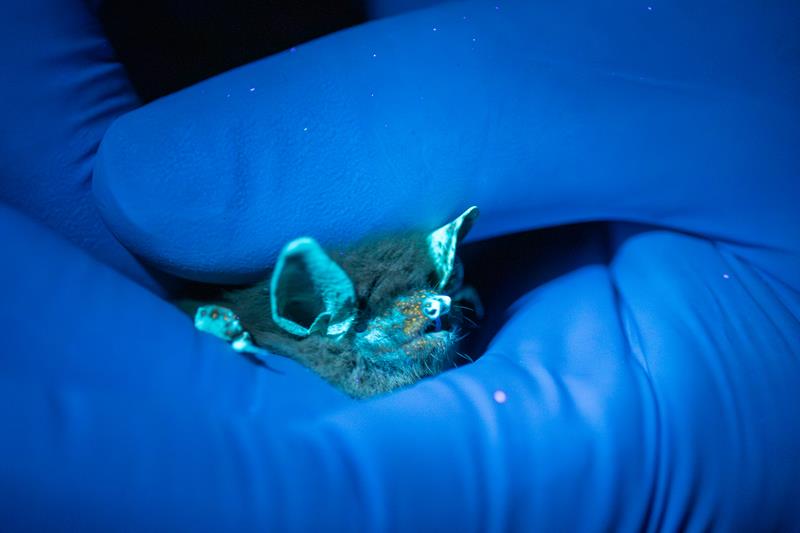
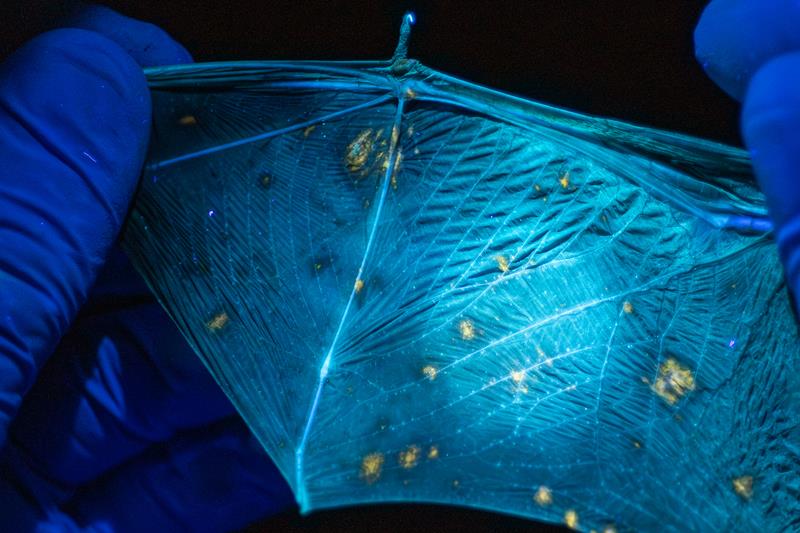
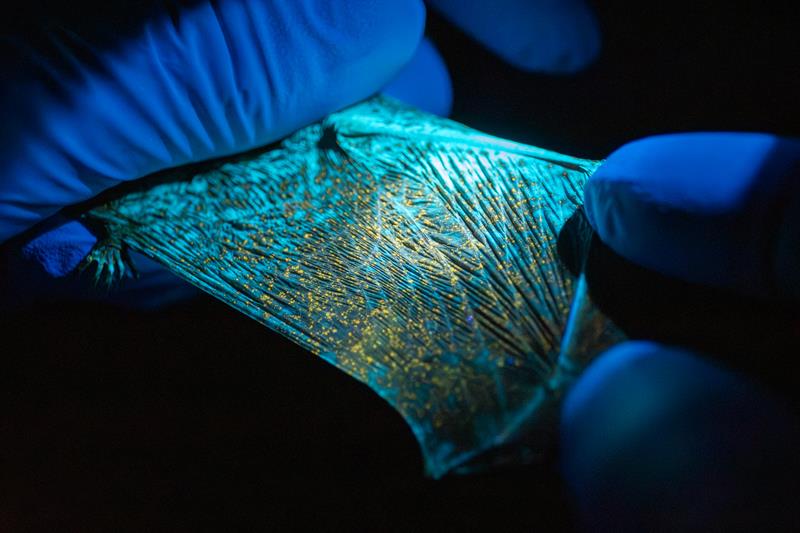
This fungus primarily grows during the winter while bats hibernate. However, there are few known bat hibernacula in Alberta where bats can be directly observed. Instead, WNS was confirmed through examination of bats captured during early May, soon after emergence from hibernation. The conclusion that WNS occurs in Alberta was based on histology (microscopic examination) of tissue samples showing fungal hyphae penetrating the bat’s skin (completed at the University of Calgary), as well as orange florescence under ultraviolet light (see photos), minor scarring, and the genetic detection of Pseudogymnoascus destructans (Pd; the fungus that causes this disease) on the bat’s wing. In total, three Little Brown Myotis at two separate locations were confirmed to have this disease, but that’s only a trivial portion of the number of bats likely to be impacted.


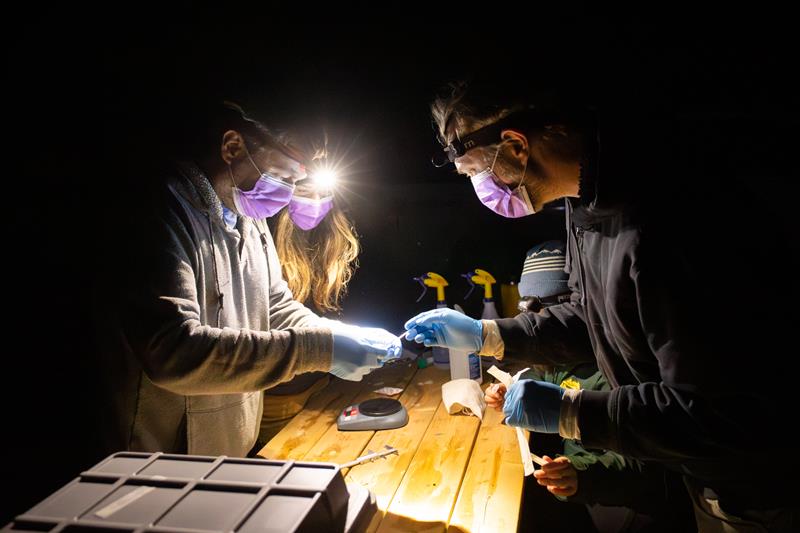
The detection is the result of spring surveys completed as a collaboration between Wildlife Conservation Society Canada and Alberta Environment and Protected Areas (and many volunteers) to better understand the impacts that WNS is having on Alberta’s bats. This work follows our discovery of Pd in 2022 in the same area. The next critical step is to confirm if WNS is resulting in population decline; monitoring to already underway to address this issue.

The good news is that work in the region is supporting new investigations into white-nose syndrome and bat biology that offer hope for improving our ability to manage this disease and respond to future conservation challenges.


Thank you to all those who supported this project. We received funding for this project from the Government of Alberta, Environment and Climate Change Canada, Alberta Conservation Association, Molson Foundation, and several private donors. Laboratory work was completed by the University of Calgary Faculty of Veterinary Medicine (with support from the Canadian Wildlife Health Cooperative) and the University of Guelph Animal Health Lab.

Additional information can be found on the Government of Alberta’s website: https://www.alberta.ca/white-nose-syndrome.


Posted June 2024

Photos by Jason Headley.

White-nose syndrome confirmed in Alberta for first time Read More »